Company

Our story

ommonwealth Fusion Systems has grown from a foundation of rigorous fusion science into a company that’ll unlock humanity’s boundless potential.

The company was born from the realization that new magnet

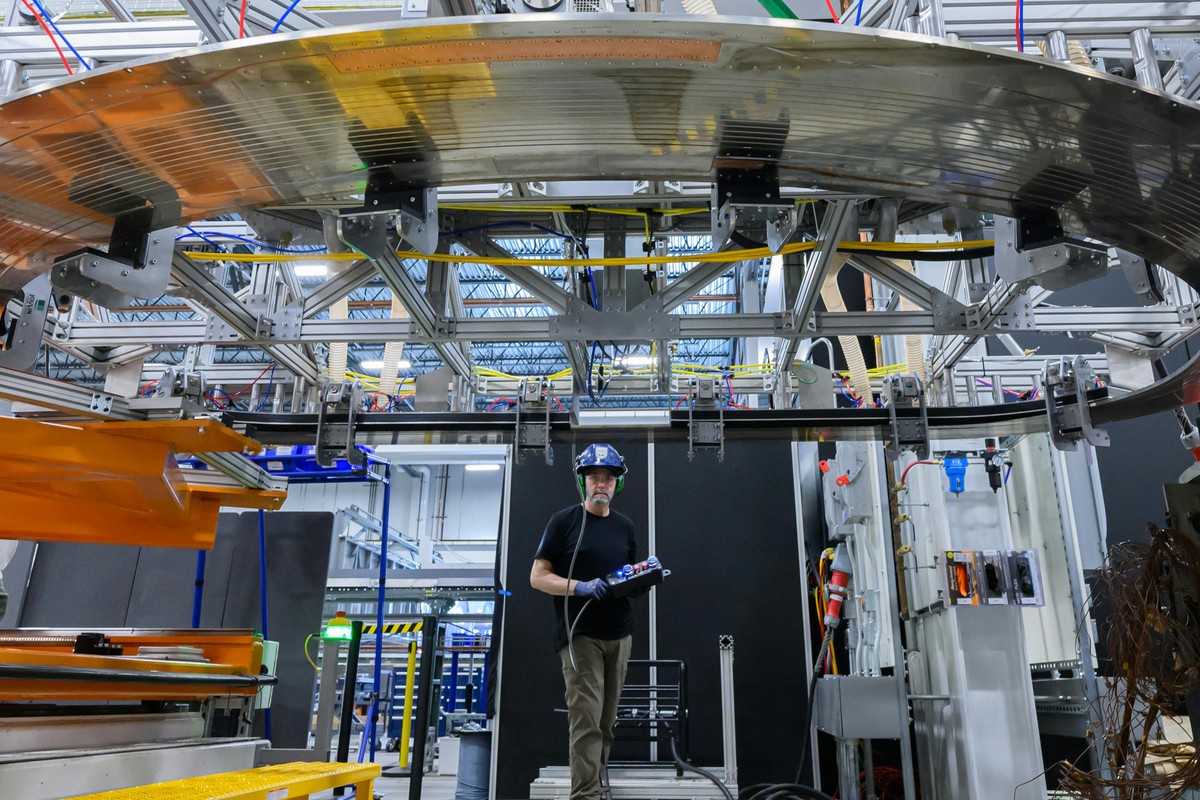
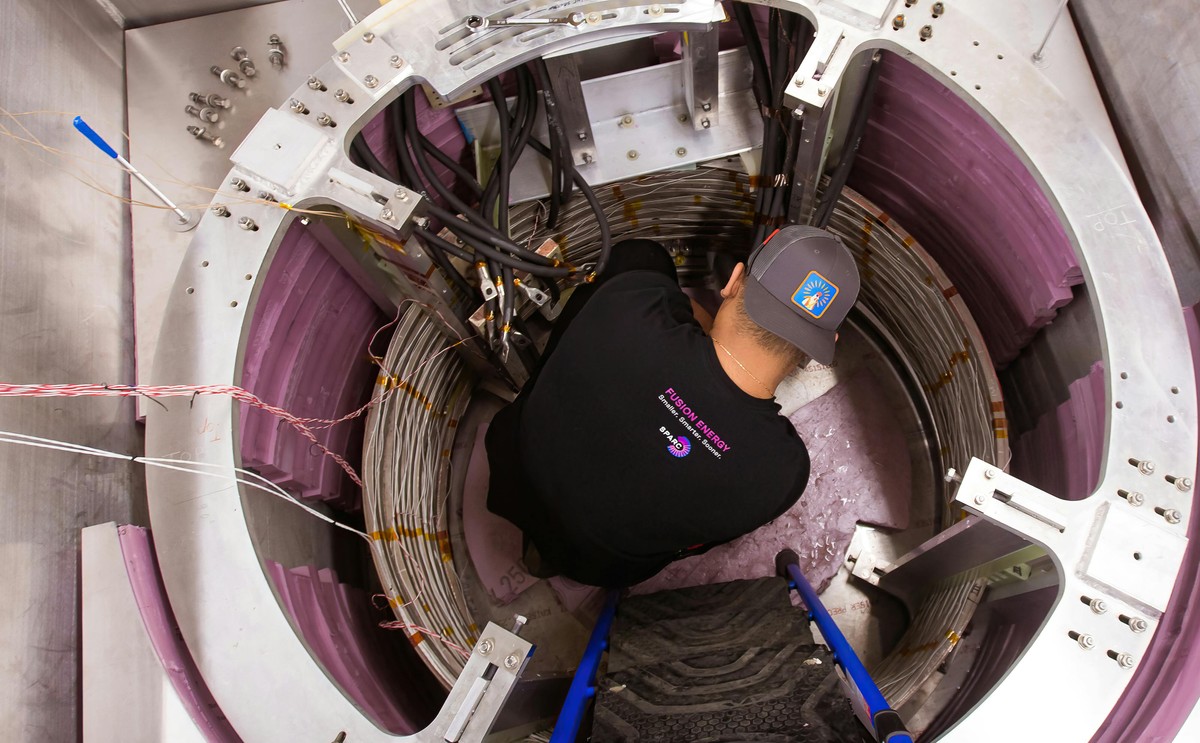
technology brings an energy revolution into humanity’s grasp. The key innovation: high-temperature superconductors that can drive the powerful magnets that run our fusion machines.

In 2018, CFS was spun out of MIT, combining decades of fusion research with the private sector's speed and agility.

We’ve raised over $2 billion in capital — more than any other fusion energy company — and attracted top talent to design and build commercial fusion power plants. And we’re working with policymakers and suppliers to make fusion energy available globally.

As we push toward, we'll keep meeting milestones, sharing our progress, and encouraging others to do the same.

Company

Mission

ur mission is to deliver the urgent transition to fusion energy.

It’s urgent. The gap between the energy we need and the energy we have is widening every day. We’re working to put fusion energy on the grid soon enough to matter for humanity’s biggest challenges.

It’s a big transition. Fusion is a critical part of the global shift away from fossil fuels. We’re beginning this new chapter for the world’s energy supply by helping to build a full-fledged fusion energy industry.

We’re committed. We’ll deliver fusion power plants as we’ve delivered on other promises — like the world’s strongest high-temperature superconducting magnet, the game-changing technology that’s making commercial fusion energy a reality.

Company

Open Innovation at CFS

usion power will draw together many technologies, from cryogenics and artificial intelligence to neutron detectors and high-voltage transistors. It will also draw together many types of people and organizations, from many backgrounds and across

many locations — from U.S. National Labs with billion-dollar budgets to foreign research organizations to three-person startups.

CFS believes the fastest path to commercial fusion is leveraging best-in-class technologies, people, and institutions, wherever they may be. That is why we have built a dedicated Open Innovation team to support our position as an open and collaborative partner and build the fusion future by discovering, recruiting, and engaging partners and capabilities around the world.

Partnerships Bring Results
CFS has established dozens of public and private research partnerships, supported by both private and public funding won from research agencies in open competition. These programs have built hardware, launched careers, and solved problems on the way to the first commercial fusion electrons. We routinely publish work we complete with our partners in peer-reviewed journals, including:

  • A collection of papers outlining the physics basis for the SPARC tokamak, demonstrating that its design is expected to reach energy break-even if appropriate high-field magnets can be built.
  • A demonstration of a high-field magnet enabling SPARC, part of a larger collection of papers to be published.
  • A new cable technology capable of withstanding the extreme conditions of a fusion device.
  • An approach to monitoring cable operational safety using fiber optics.

Partnership Opportunities
CFS continues to develop its partner network and relationships, with technical focus falling into three broad categories:

  • SPARC – Because SPARC will produce a burning plasma and reach plasma energy gain by mid-decade, it is an attractive platform for public science and an emerging new destination for scientists and research programs. Opportunities range from plasma physics to operations and diagnostics.
  • ARC ARC will be our first commercial power plant, building on the experience gained through SPARC and adding power extraction systems built around a molten salt loop. It will leverage novel materials and manufacturing, blanket and fuel cycle, and remote maintenance technologies.
  • Other applications Our unique magnet technology and manufacturing capability is enabling technology programs beyond the tokamak and outside of fusion altogether.

To support these programs, we have a successful track record of establishing partnerships supported by a variety of financial instruments, including INFUSE, ARPA-E, FAIR, and RENEW.

Are you interested in working with us? Email us.

Company

Commercial Partners

Google

Google and Commonwealth Fusion Systems (CFS) announced a new global milestone, a bold partnership to develop, deploy and scale clean, secure fusion power. We expect it’ll cement CFS leadership in commercializing the technology.

Through this partnership:

Google signed an offtake agreement for 200 megawatts (MW) of clean fusion power from CFS’s inaugural ARC power plant in Chesterfield County, Virginia.

Google, an investor in CFS since 2021, is increasing its investment stake in CFS.

The commitment to CFS’ first ARC fusion power plant and the additional corporate investment are part of a strategic partnership in which Google has the option to purchase power from future plants.

The agreement reinforces CFS’ global leadership towards developing commercial fusion power — a technology that promises to be transformative in the face of accelerating long-term growth in energy demand.

The agreement pairs the leading fusion energy developer with one of the most innovative companies in the world, a pioneer in commercial agreements that drove the success of new clean energy sources. It shows a strong appetite for fusion energy’s advantages: a source of clean, safe, and firm power that can be built in the same regions where homes and businesses have a growing electricity appetite.

“By entering into this agreement with CFS, we hope to help prove out and scale a promising pathway toward commercial fusion power. We’re excited to make this longer-term bet on a technology with transformative potential to meet the world’s future energy demand, and support CFS in their efforts to reach the scientific and engineering milestones needed to get there,” said Michael Terrell, Head of Advanced Energy at Google.

Dominion Energy

A collaboration between Dominion Energy Virginia and CFS will speed the arrival of the world’s first grid-scale fusion power plant in Chesterfield County, Virginia, a region with some of the fastest growing demand for power.The Virginia util

The Virginia utility will provide CFS with development and technical expertise that’ll help connect the first ARC fusion power plant to the grid. In addition, Dominion will offer leasing rights for the planned site for the ARC fusion power plant. CFS will provide Dominion with knowledge about how to build and operate fusion power plants that’ll give the utility an early view into this emerging source of power, providing an advantage in the scaling and deployment of fusion as it matures.

“Commonwealth Fusion Systems is the clear industry leader in advancing the exciting energy potential of fusion,” said Edward H. Baine, President of Dominion Energy Virginia, in the 2024 announcement of the agreement. “Our customers’ growing needs for reliable, carbon-free power benefits from as diverse a menu of power generation options as possible, and in that spirit, we are delighted to assist CFS in their efforts.”

Type One Energy

Type One Energy licensed CFS’ groundbreaking high-temperature superconducting (HTS) cable technology to develop magnets for its fusion machine, a type of device called a stellarator. CFS has shown its HTS magnet technology can be used to generate the very high magnetic fields that are essential to fusion devices such as Type One Energy’s stellarators or CFS’ tokamaks.

The agreement means Type One Energy can benefit from CFS’ experience in manufacturing the world’s most powerful HTS fusion magnets. And it expands the market for CFS’ magnet business by aligning with the leading stellarator fusion company in the market.

“Commonwealth Fusion Systems is the clear industry leader in advancing the exciting energy potential of fusion,” said Edward H. Baine, President of Dominion Energy Virginia, in the 2024 announcement of the agreement. “Our customers’ growing needs for reliable, carbon-free power benefits from as diverse a menu of power generation options as possible, and in that spirit, we are delighted to assist CFS in their efforts.”

Become a Supplier

How to become a CFS supplier

Commonwealth Fusion Systems is building a global supply chain ecosystem to support our audacious goal of delivering the urgent transition to fusion energy.

We’re looking for highly technical, innovative, and mission-aligned suppliers to work with us toward this vision. We’re committed to being great partners and treating our suppliers with transparency as we work together to solve hard problems.

Learn how we select our partners:

1. To become a supplier

To join our network, we invite you to apply through the form below. This allows us to understand your organization better and explore potential collaboration.

2. You're in our database!

Once you’re in our database, if we find a project that matches your expertise, we’ll contact you and conduct our qualification process. There will be no need to reach back out to us at this time.

3. Qualification phase

CFS thoroughly evaluates potential suppliers on various criteria, including financial stability, technology, innovation, quality management systems, and value creation. We specifically look at:

Company financial health

Quality systems

Applicable experience

Technical capabilities

Compliance

4. You’re a CFS supplier

Once the qualification process is completed and you win prospective bids, you have become a CFS supplier.

01

02

03

Company

FAQ

Q: What is fusion energy?

A: Fusion, the physical process that powers the sun, occurs when light atoms like hydrogen combine to form heavier atoms like helium. That releases tremendous amounts of energy. Fusion is hard to reproduce on Earth, but CFS machines use a design called a tokamak to do so. Fusion releases no carbon dioxide or other greenhouse gases. Because fusion is clean, reliable, and safe, with abundant fuel, it could be the last energy source humanity needs.

Q: Who is Commonwealth Fusion Systems?

A: CFS, based in Massachusetts, spun out of MIT in 2018 to commercialize fusion energy. The company is based in Devens, Massachusetts, where it’s building a fusion machine in collaboration with MIT. That machine, SPARC, will demonstrate fusion energy viability by producing more fusion power than it uses to sustain the process. The company has raised more than $2 billion to date. Key to the company’s approach is a technology called high-termperature superconductors that enable powerful electromagnets that make fusion power plants smaller and more economically competitive.

Q: Why is CFS commercializing fusion energy?

A: CFS believes that access to clean, abundant, affordable energy and an environment preserved for future generations are fundamental human rights. ARC advances this view with a business that meets the world’s growing energy needs. ARC will provide round-the-clock power regardless of wind, weather, or season and can be built where power demand is high. Its abundant fuel improves energy security. All the fuel required to operate ARC for decades will fit on a truck.

Q: How will CFS make fusion energy work with SPARC and ARC?

A: We use powerful electromagnets to confine and control our fusion fuel, turning the hydrogen into a highly energetic cloud of particles called a plasma housed in a donut-shaped machine called a tokamak. We’ll heat the plasma to about 100 million degrees Celsius so it becomes energetic enough for fusion to occur. For fuel, we’ll combine two forms of hydrogen, deuterium and tritium, to form helium and energetic neutrons. We’re demonstrating this technology with a fusion machine called SPARC that’s under construction now in Devens, Massachusetts.

The company’s next tokamak is a power plant called ARC that’ll put about 400 MW of power onto the grid in Chesterfield County, Virginia. It'll feature a “blanket” of molten salt that captures the neutrons’ energy. The resulting heat is transferred to water that drives a conventional steam turbine to generate power. The neutrons also create tritium in the blanket that supplies the power plant’s fuel needs in a closed cycle.

Q: What does a fusion power plant look like?

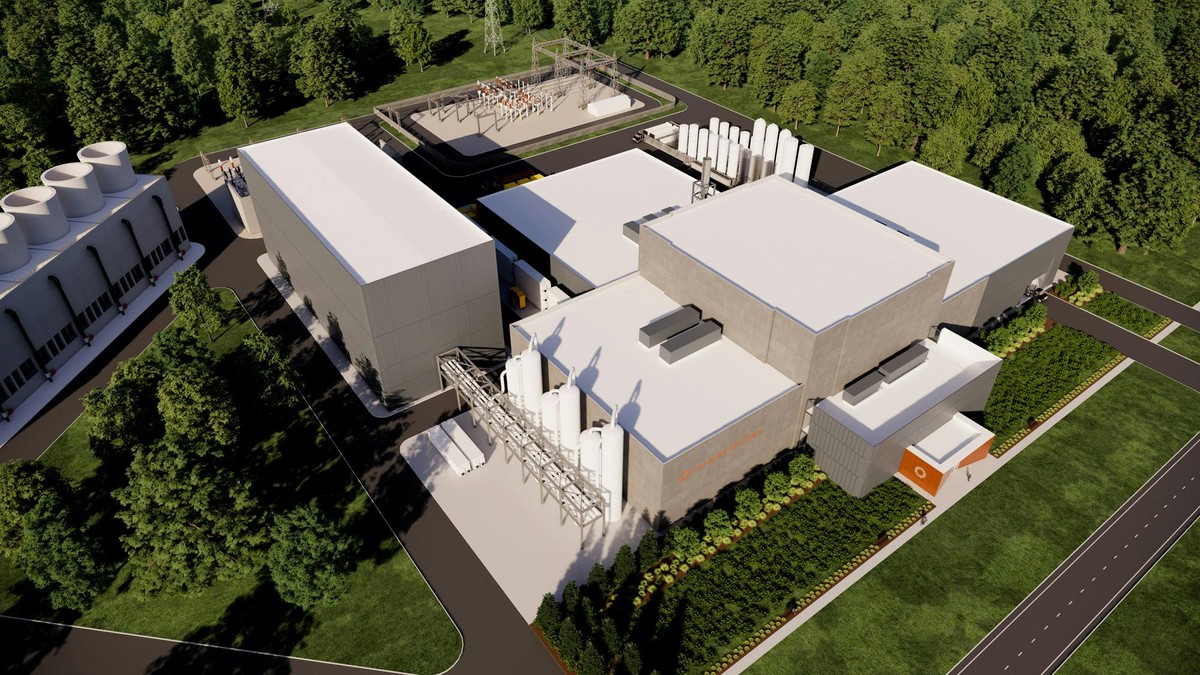
From the outside, the ARC power plant will reside in buildings with about the same size and appearance as a big-box retailer. To the electric grid, an ARC power plant will resemble a gas plant with the ability to provide power on demand, but without any fuel piped in or greenhouse gases or pollution going out.

Q: How is fission, usually called nuclear power, different from fusion?

A: Fission and fusion are completely different physical processes with different fuels, facilities, risk profiles, and thus different regulations. Fission, usually called nuclear power, captures the energy released when heavy atoms like uranium split apart. Fusion captures energy when light atoms like hydrogen combine to form heavier elements. Unlike with fission, there’s no possibility with fusion of a runaway chain reaction or meltdown. Spent nuclear fission fuel is highly radioactive and long-lived (10,000 years), whereas fusion produces modest amounts of low-level, short-lived (50-100 years) byproduct materials.

Q: Is fusion energy safe? How will it be regulated?

A: Yes. With fusion energy, there’s no possibility of runaway chain reactions or meltdowns, and there’s no long-lived, highly radioactive waste like that from nuclear fission. Tritium is weakly radioactive, so to store and handle it, CFS will use well-established technology and processes and will comply with applicable regulations. If any air enters the tokamak’s interior, it immediately and safely stops the fusion process. US regulations treat fusion power plants similarly to how they treat particle accelerators, not nuclear fission plants — an approach that recognizes fusion’s inherent safety and supports its rapid scaling. ARC will require a radioactive materials license from Virginia.

Q: What are the benefits of fusion energy?

A: Fusion energy has many of the characteristics of an ideal power source:

Clean: no carbon dioxide or other greenhouse gas emissions;

Safe: no possibility of runaway chain reactions or meltdowns and no long-lived, highly radioactive waste like that from nuclear fission;

Firm: provides power around the clock regardless of wind, weather, or season;

Scalable: modular and power-dense plants take up less space so they can be built near demand. That requires less power line infrastructure and ultimately makes their power more affordable; and

Secure: with fuel that’s abundant and available everywhere, fusion won’t rely on any geopolitically fraught supply chains. That can allow regions to effectively “own” their own energy. In fact, all the fuel required to operate the plant for decades will fit on a truck.

With these characteristics, many believe that fusion is not just the next new energy source, but the last energy source humanity will need.

Q: What fuel does a fusion power plant use?

A: Our design uses two forms of hydrogen, deuterium and tritium as our fuel. Hydrogen is the most abundant element in the universe. Deuterium is easily extracted from seawater, and fusion and fission both can be used to produce tritium. Fusion power plants will fuse deuterium and tritium to generate heat that’s converted to electricity.

Q: How will ARC affect the climate change fight?

A: Fusion power plants will be an incredibly important tool in fighting climate change: they can be the most scalable, deployable, and affordable source of firm, zero-carbon power. Because of this, ARC power plants will become the backbone of future power grids, providing the firm power traditionally provided by gas or coal plants. ARCs can leverage some of the existing infrastructure of those traditional plants and be sited much closer to areas that need power, speeding up deployment to meet the growing demand for firm, zero-carbon power. ARCs can also be an excellent complement to wind and solar in those regions where those power sources are plentiful. The end result is that fusion power has the chance to avoid gigatons of greenhouse gases (GHGs) while making energy abundant and affordable, ushering in energy prosperity for all.

Q: How does fusion energy affect energy independence?

A: Because its fuel can be filtered from ordinary seawater, fusion increases energy security: Regions using fusion power aren’t dependent on natural resources that lie elsewhere on the globe. Fusion also can boost economic competitiveness with reliable, affordable energy that businesses value. ARC will be a scalable energy technology that can be replicated at many locations, leading to not just independence, but to abundance and sustainable economic growth. And, although China has an active fusion energy program of its own, developing fusion is a chance for the US to prove its technical leadership.